
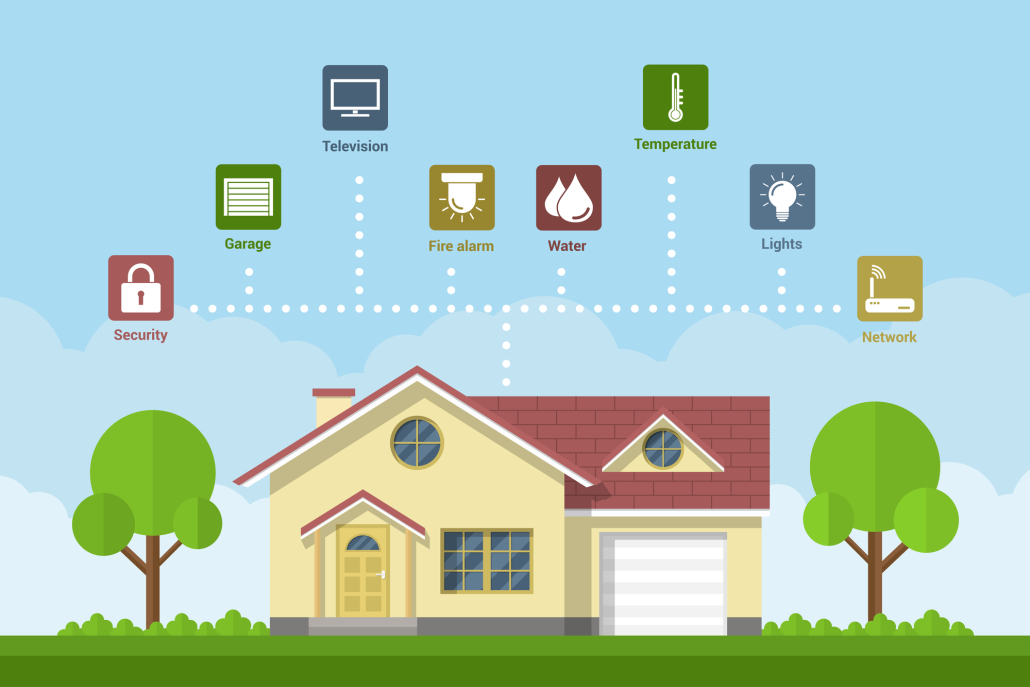
Smart Home Evolution: Integrating Devices for Seamless Automation
Smart homes are becoming increasingly popular as people look for ways to make their homes more comfortable, energy-efficient, and secure. Smart home devices can be integrated to work together seamlessly, automating tasks and making life easier.
The first smart home devices were relatively simple, such as light switches and thermostats that could be controlled with a remote control or smartphone app. However, as technology has advanced, smart home devices have become more sophisticated and can be integrated with a variety of other devices and systems. For example, smart thermostats can now be used to control the temperature of your home based on your schedule and occupancy, and smart lights can be programmed to turn on and off at certain times or in response to motion.
There are a number of different ways to integrate smart home devices. One popular option is to use a smart home hub, which is a central device that connects all of your smart home devices together. This allows you to control all of your devices from a single app or interface. Another option is to use a voice assistant, such as Amazon Alexa or Google Assistant. Voice assistants can be used to control smart home devices with simple voice commands.
The integration of smart home devices is still in its early stages, but it is rapidly evolving. As more and more devices become available, and as the technology improves, we can expect to see even more seamless and sophisticated automation in our homes.
Here are some of the benefits of integrating smart home devices:
- Comfort: Smart home devices can make your home more comfortable by automating tasks such as turning on the lights when you come home or adjusting the thermostat to your preferred temperature.
- Energy efficiency: Smart home devices can help you to save energy by automating tasks such as turning off lights when you leave the house or adjusting the thermostat when you are asleep.
- Security: Smart home devices can help to improve the security of your home by automating tasks such as locking the doors when you leave or turning on the alarm system when you are away.
- Convenience: Smart home devices can make your life more convenient by automating tasks such as turning on the coffee maker in the morning or playing music when you get home.
If you are considering creating a smart home, there are a few things you need to keep in mind:
- Choose the right devices: There are a wide variety of smart home devices available, so it is important to choose the devices that are right for your needs.
- Make sure the devices are compatible: Not all smart home devices are compatible with each other, so it is important to make sure the devices you choose will work together.
- Invest in a smart home hub: A smart home hub is a central device that connects all of your smart home devices together. This makes it easier to control all of your devices from a single app or interface.
- Use a voice assistant: Voice assistants such as Amazon Alexa and Google Assistant can be used to control smart home devices with simple voice commands. This makes it easy to control your devices hands-free.
By following these tips, you can create a smart home that is comfortable, energy-efficient, secure, and convenient.